Do you cover your mouth when you laugh because of a chipped, stained, or uneven tooth? Veneers are thin ceramic shells bonded to the front of teeth to improve their colour, shape, and alignment. Patients can now choose between lab-made porcelain veneers and CEREC veneers milled in the dental clinic on the same day. If you are weighing porcelain veneers in Delta against same-day options, this guide explains how each one works, how long they last, and which factors may shape your decision.
What Are Porcelain Veneers?
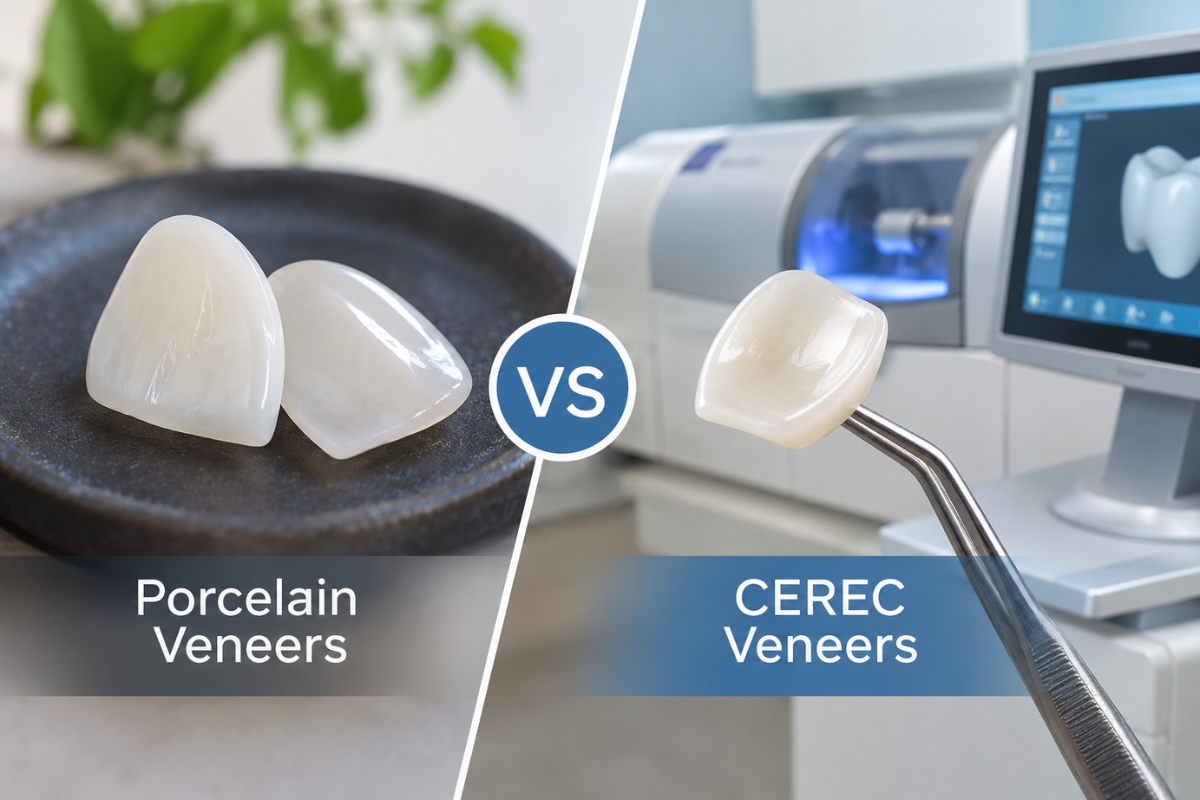
Traditional porcelain veneers are custom-made in a lab using detailed molds or 3D digital scans of your teeth. A ceramist layers the porcelain by hand, adjusting translucency and shade to blend with your natural smile. Because the work is done off-site, treatment usually takes two or three appointments over a few weeks, with temporaries worn in between appointments.
What Are CEREC Veneers?
CEREC stands for Chairside Economical Restoration of Esthetic Ceramics. It is a CAD/CAM system that designs and mills ceramic restorations in the dental clinic near you.
After the dentist prepares and scans your teeth, a milling unit shapes each veneer from a solid block of ceramic. The veneers are then polished, glazed, and bonded during the same visit, which is why they are often called same-day veneers.
Key Differences
Appearance
Lab-made porcelain veneers are often considered the gold standard for complex cosmetic cases because the ceramist can build subtle colour gradients. CEREC veneers are milled from a single block, so the shade is uniform. Modern ceramic blocks look lifelike, but hand-layered porcelain still offers the most control over fine aesthetics.
Treatment Time
Porcelain veneers require a waiting period while the lab completes the work. CEREC veneers are usually finished in a single appointment of two to four hours, depending on how many teeth are treated.
Durability
Both choices rely on high-strength ceramic materials. Materials like lithium disilicate, commonly used in CEREC, hold up extremely well against chipping. Layered porcelain looks great, though its fine edges can occasionally be a bit more fragile. At the end of the day, how well you care for your teeth makes a much bigger difference than how your veneers were made.
Cost
The cost of CEREC veneers varies based on individual dental needs and the number of veneers required. Since they are made in the dental clinic in Delta, there may be no additional outside laboratory fees. A consultation can help determine the expected cost based on the treatment plan.
How Long Do Veneers Last?
Patients frequently ask how long veneers actually last. Traditional porcelain options typically last 10 to 15 years, with many remaining in great shape for two decades or more. Same-day CEREC veneers hold up just as long, with studies showing excellent durability even past the ten-year mark. How long they last mostly comes down to daily habits, so keeping up with brushing, managing night-time grinding, and keeping hard items like ice out of your mouth will go a long way.
Which Option Is Right for You?
Choose traditional porcelain veneers if you are transforming several front teeth, correcting noticeable discolouration, or want the highest level of customization. Choose CEREC veneers if you need one or two teeth restored, prefer a single visit, or want to skip temporaries. A dental clinic near you that offers both can assess your enamel, bite, and goals before recommending the right option.
Ready to Compare Your Options?
Choosing between porcelain and CEREC veneers depends on your dental needs, preferred appearance, and treatment goals. The right information can help you make a choice that feels comfortable and suits your expectations. Contact Delta Centre Laser Cosmetic Dentistry to schedule a consultation. You can discuss both veneer options, learn about the treatment process, and find out which approach may be suitable for improving your smile.
FAQ’s
Are CEREC veneers as strong as porcelain veneers?
Yes. CEREC veneers are milled from dense ceramic blocks, and lithium disilicate versions match the strength of lab-made porcelain.
Do veneers damage natural teeth?
A thin layer of enamel is usually removed so the veneer sits flush. This step is permanent, which is why candidacy is assessed carefully beforehand.
Can veneers be whitened?
No. Ceramic does not respond to bleaching, so the shade is selected before the veneers are made. Surrounding teeth can be whitened first to match.
How many visits are needed for CEREC and traditional porcelain veneers?
CEREC veneers may be completed in fewer visits because they are designed and made in the dental clinic. Traditional porcelain veneers usually require multiple visits because they are created in an outside dental lab. The exact number of appointments depends on your treatment needs.